
US Disclaimer: Gambling rules vary from one country to the next, and within the United States they vary from state to state. This guide is written for readers in places where online gambling and sports betting are legal and licensed, and it deals with keeping a legitimate account secure. It does not cover how to sign up, fund an account, or place a wager from somewhere the operator or the law forbids it. Most US states still offer no legal online casino play, and offshore sites that accept US customers hold no license in any US state.
Using a VPN to disguise where you are breaches the terms of every licensed operator, and it can leave you with a closed account and a forfeited balance. It may also break state or national law. We're not lawyers, and none of this is legal advice. Check the rules that apply where you live. If gambling has stopped being fun, US residents can call 1-800-GAMBLER.
Most people arrive at a VPN and a betting site with the same two worries: whether the operator permits one, and what the law says where they live. Neither answer bends as far as VPN marketing suggests. A VPN does have a job on a casino or sportsbook. Encryption covers the link from your device to the site, leaving your ISP and the owner of any network you’re on with a record of a VPN server and no sight of the session or the money moved through it.
On hotel and cafe Wi-Fi, that’s the difference between a private deposit and one made across equipment you don’t own. The same encryption keeps your search history away from the ISP.
Quick Summary: Top VPNs for Gambling and Sports Betting in 2026
- NordVPN – Fastest VPN for gambling, with the strongest threat filtering
- Proton VPN – Swiss jurisdiction and published source code
- ExpressVPN – Simplest to set up VPN for gambling
- CyberGhost – Longest refund window on VPN for gambling
- Surfshark – No cap on connected devices
Can You Use a VPN to Gamble Online?
Yes, on a site licensed for the country you’re physically in. Encryption on a gambling account is the same protection you’d want on a banking one, and no operator objects to it. The version of the question most people mean is different: whether a VPN opens a site that has closed itself to your country. It doesn’t. Licensed operators gave up on IP addresses as a location signal a long time ago.
Registration takes identity documents. In regulated US markets, that means a Social Security number, date of birth, and proof of address, and the name on the account has to match the payment method. Deposits are limited to cards and bank accounts issued in the licensed territory, which is a wall an IP address doesn’t climb. Location is then checked at the moment of the wager.
US-regulated sportsbooks and casinos are required by their state regulators to verify physical presence through geolocation software that reads GPS, nearby Wi-Fi, and mobile data alongside the IP address. A mismatch stops the transaction.
Do Online Casinos Allow VPNs?
Almost none of them do. Some name the tool. Rainbet’s terms prohibit VPNs, proxies, or similar services that mask or manipulate a customer’s real location. Gamdom covers it twice, once in its jurisdiction clause and again in a list of forbidden actions. Stake prohibits misrepresenting location and reserves the right to void the account and keep the balance. Others describe the behavior without naming the technology.
PokerStars customers in the US agree to leave their device’s IP undisguised and to avoid any step that would stop the operator from identifying it. GGPoker’s terms never mention VPNs and allow immediate suspension of an account opened or used from a prohibited jurisdiction. The consequences follow a pattern. Accounts get suspended while the operator investigates, bets are voided, and balances, including deposits, can be kept.
Verification is usually where it surfaces, because the document request tends to arrive with a first withdrawal, by which point an account may have been active for weeks. Read the terms of the specific site before you assume otherwise. They’re the only source that governs your account.
Gambling and VPNs by Country
Canada
Provinces set their own rules. Ontario licenses private operators through iGaming Ontario, and elsewhere the provinces field their own platforms, PlayNow and Loto-Québec among them. Offshore sites take Canadian customers too, and the federal Criminal Code aims at unlicensed operators instead of players. VPNs are legal countrywide.
Great Britain
The Gambling Commission licenses every operator serving British customers, and licensed sites are open without regional restriction inside Great Britain. Several offshore brands exclude the UK precisely because they have no Commission license. That decision belongs to them, and it turns on licensing.
United States
Connecticut, Delaware, Michigan, New Jersey, Pennsylvania, Rhode Island and West Virginia license online casino play; sports betting licensing is much broader. Utah and Hawaii permit neither. Identity and physical presence are verified by every licensed operator, and no offshore site accepting Americans has a state license.
India
Every online money game has been prohibited nationwide since 1 May 2026 under the Promotion and Regulation of Online Gaming Act 2025, skill and chance alike. Payment routes are closed with it: banks, UPI, and cards can’t process the transactions, and offshore operators fall under the ban. Offline casinos in Goa, Daman, and Sikkim keep their licenses. Elsewhere, the prohibition is total: gambling is a criminal offense in Qatar and across most of the Gulf.
Best VPNs for Gambling and Sports Betting in 2026
1. NordVPN: Best Gambling VPN for Live Dealer Speed
Pros
- Fastest in testing
- Post-quantum NordLynx
- Next-gen antivirus
- Deloitte audit record
- Panama jurisdiction
Cons
- Busy desktop interface
- No port forwarding
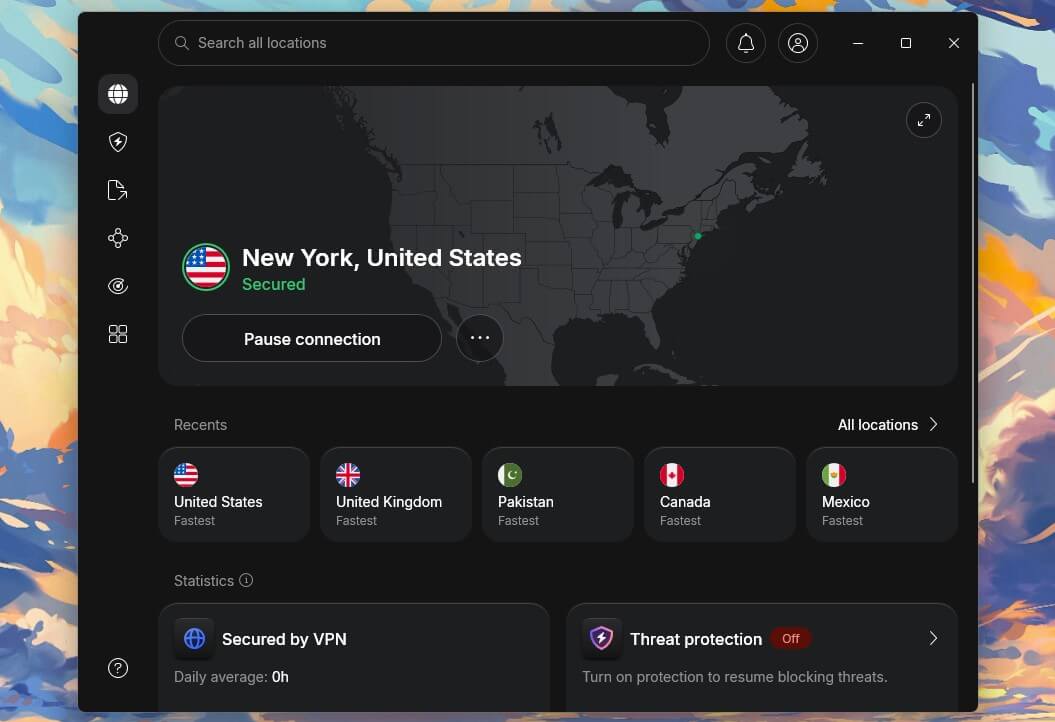
NordVPN gave us the highest speed retention, which shows on live dealer tables and in-play markets. Encryption always costs something, and our breakdown of what a VPN does to connection speed puts the trade-off in numbers. Its network covers 9,500+ servers in 149 countries, and NordLynx includes an optional post-quantum layer over 256-bit encryption.
Deloitte has audited the no-logs policy, most recently in February 2026. Threat Protection Pro screens malicious domains. AV-Comparatives put it against 275 phishing links in May 2026 and recorded a 96% catch rate, which is the category that cloned casino sign-in pages belong to. Pricing opens at $3.49 a month on the 2-year plan, with 10 devices and a 30-day money-back guarantee.
2. Proton VPN: Best for Published, Audited Code
Pros
- Swiss legal base
- Published app source
- NetShield DNS filter
- Tor over VPN
- Port forwarding
Cons
- No post-quantum option
- Disk-based servers
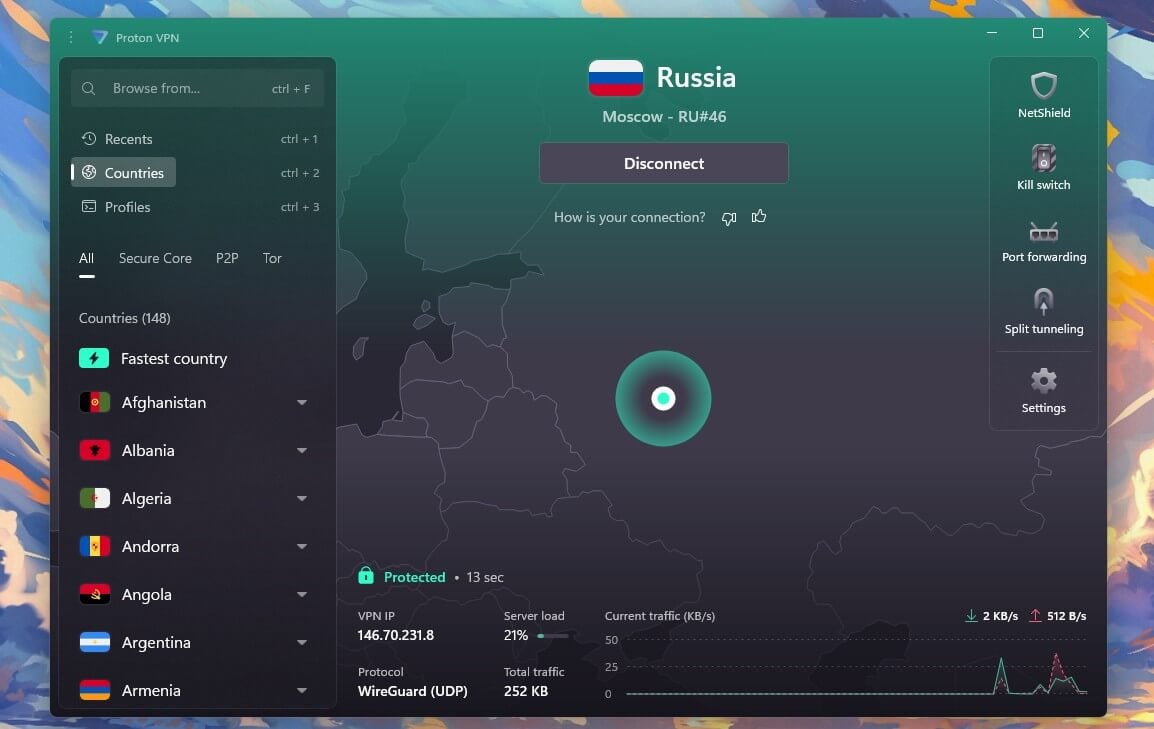
Proton VPN publishes the source for every app and puts them through outside audits, so the privacy claim is checkable, which is why it also leads our privacy coverage. Switzerland imposes no logging requirement on VPN operators, and foreign requests have to clear a Swiss court. Secure Core adds a hop through hardened hardware in Switzerland, Iceland, or Sweden, so the exit server never learns the address you connected from.
NetShield screens malware and tracker domains at resolution, and Tor over VPN routes a session into the onion network, the same feature behind our guide to browsing the dark web safely. The network spans 20,000+ servers in 148 countries. Plus, it costs $2.99 a month over 2 years ($71.76 total) on 10 devices.
3. ExpressVPN: Best for Unstable Connections
Pros
- One-tap connection
- TrustedServer RAM technology
- Own router firmware
- KPMG-audited
- Private DNS per server
Cons
- Light on configuration
- No free tier
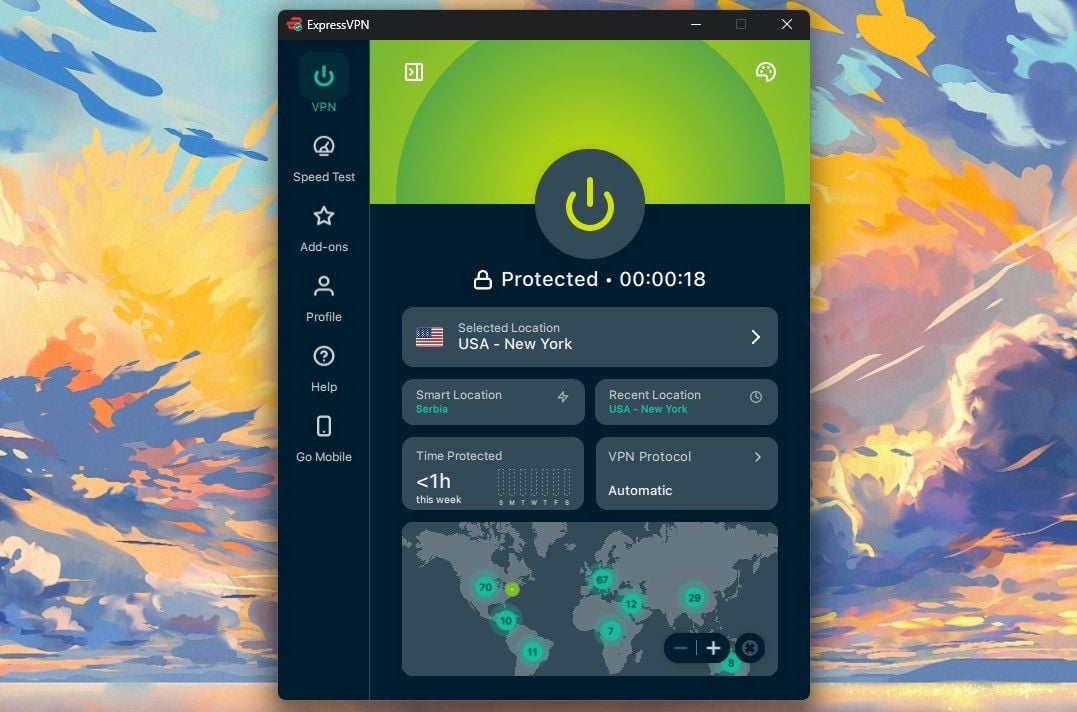
ExpressVPN asks the least of a new user. Pick a location, press connect, done. Lightway Turbo recovers fast when the underlying network changes, so a switch from Wi-Fi to mobile data doesn’t break the session. WireGuard is selectable too. TrustedServer keeps the estate diskless, and DNS resolves on each server instead of a third party’s.
KPMG reviewed the no-logs policy in 2025, and Express Technologies Ltd operates from the British Virgin Islands. Coverage is 113 countries across 214 locations. A 28-month Basic subscription totals $83.72, or $2.99 a month, so it’s not that expensive, either. Plus, you get a 30-day money-back guarantee.
4. CyberGhost: Best for the Longest Refund Window

Pros
- Longer refund window
- NoSpy server estate
- Deloitte-audited policy
- Ad and tracker blocking
- Dedicated IP available
Cons
- Seven-device limit
- Weak on filtered networks
CyberGhost gives the longest window to change your mind: 45 days on the long-term plans against 30 elsewhere. Its 12,000+ servers in 100 countries include the NoSpy estate, which the company owns and operates itself instead of renting datacenter space. Encryption is AES-256 with a kill switch and a built-in blocker for ads and trackers, useful on casino pages loaded with both.
WireGuard, OpenVPN, and IKEv2 are all selectable; Deloitte has audited the logging policy, and separate server groups handle streaming and P2P downloads. Two years cost $2.19 a month and cover 7 devices. Read the full CyberGhost review for the details.
5. Surfshark: Best for Covering Every Device

Pros
- Unlimited devices
- Dausos protocol
- Alternative ID
- RAM-only servers
- Netherlands jurisdiction
Cons
- Slow to connect
- Smaller country list
Surfshark puts no ceiling on connections, so a desktop, phone, and tablet share one subscription with room left over. macOS users also get Dausos, a proprietary protocol audited by Cure53 that assigns every user a private tunnel instead of a shared one. Alternative ID issues a throwaway name and email for sign-ups, so a casino account never touches the email your bank has. CleanWeb filters ads and trackers. Surfshark has 4,500+ servers and 100 countries. Starter is $2.49 a month over 27 months.
Compare the Best Gambling VPNs
| NordVPN | Proton VPN | ExpressVPN | CyberGhost | Surfshark | |
| Countries | 149 | 148 | 113 | 100 | 100 |
| Devices | 10 | 10 | 10-14 | 7 | Unlimited |
| Jurisdiction | Panama | Switzerland | BVI | Romania | Netherlands |
| Refund window | 30 days | 30 days | 30 days | 45 days | 30 days |
| Start price | $3.49/mo | $2.99/mo | $2.99/mo | $2.19/mo | $2.49/mo |
Is There a Free VPN for Gambling?
Free plans are a poor match for a betting account. A data ceiling cuts a session short, shared servers slow down once they fill, and advertising-funded plans are a poor companion for a cashier page. Compared against paid plans, only one free tier stands up on privacy. Proton VPN’s costs nothing, imposes no data limit, shows no ads, and applies the same logging policy as its paid plan.
The trade-off is 10 countries, an automatically assigned server, and a single device. All 5 paid picks refund within 30 days, and CyberGhost within 45, which makes for a proper test.
Summary of the Best VPN for Gambling
Almost no gambling operator permits VPN use to conceal location, and the ones that avoid naming the technology prohibit the behavior. A VPN changes an IP address, and licensed operators stopped trusting that signal years ago, behind identity documents, payment-method matching, and GPS verification at the moment of the bet. What a VPN does do is protect an account you’re entitled to have.
NordVPN was the fastest with the best threat filtering. Proton VPN publishes the most about itself. ExpressVPN demands the least attention once installed, CyberGhost allows the longest change of mind, and Surfshark covers a whole household without a device cap. Play where you’re licensed to play, and gamble responsibly.
Frequently Asked Questions
🎰 Can I use a VPN to gamble online?
Yes, where the platform already accepts customers from that country. Encryption is welcome on any account; what operators prohibit is presenting a location the player isn't in.
♦️ Do online casinos allow VPNs?
No, almost none. Most operator terms prohibit concealing location, either by naming VPNs and proxies directly or by barring any step that hides a customer's whereabouts from the platform.
⚽ Do VPNs work for sports betting?
Yes for privacy, no for access. Licensed sportsbooks verify identity with documents and confirm physical presence by GPS before accepting a wager, so an IP address change achieves nothing.
🍁 Is a VPN legal for gambling in Canada?
Yes. VPNs are legal throughout Canada, and provinces license their own online operators. Using one to misrepresent location still breaches the terms of every licensed Canadian platform.
🔎 What happens if a betting site detects a VPN?
The account is typically suspended while the operator investigates. Terms across the industry allow voided bets and confiscation of the balance, deposits included, once a breach is confirmed.
🆓 Is there a free VPN for gambling?
Yes, barely. Only Proton VPN's free tier avoids data caps and advertising, and it still limits players to 10 countries, an automatic server, and one device.