pCloud is a legitimate Swiss cloud storage company with over 22 million users. In our November tests, it uploaded a 2 GB file at 96% of our upload speed, and deleted files were recoverable from the trash. Its free plan starts at 2 GB and goes up to 10 GB through setup tasks and invitations. The weak point is encryption.
Zero-knowledge protection is a paid add-on, and ETH Zurich researchers published flaws in that add-on in 2024 without pCloud announcing a fix. For media libraries and long-term archives, the lifetime plans are its strongest argument.
pCloud at a Glance
| Our score | 9.5/10 |
| Company | pCloud AG, Baar, Switzerland, founded in 2013 |
| Data regions | US (Dallas) or EU (Luxembourg), chosen at signup |
| Free storage | 2 GB at signup, up to 10 GB |
| Paid storage | 500 GB, 2 TB, or 10 TB, plus family and business plans |
| Billing | Monthly, yearly, or lifetime |
| Starting price | $49.99 a year for 500 GB |
| File recovery | 15 days free, 30 days paid, up to 365 days with an add-on |
| Zero-knowledge encryption | Paid add-on, included on business plans |
| Maximum file size | No limit |
| Our 2 GB test | 15:14 upload, 1:45 download |
| Apps | Windows, macOS, Linux, iOS, Android, and web |
| Refund window | 14 days |
Pros
- Lifetime licenses up to 10 TB
- Uploads close to the connection’s top speed
- Files of any size
- Rewind rolls back the whole account
- Choice of US or EU storage
- Built-in music and video player
- Linux desktop app
Cons
- Client-side encryption is an extra purchase
- No announced fix for published encryption flaws
- Inactive free accounts are deleted
What Is pCloud, and Where Is It Based?
pCloud is a cloud storage service run by pCloud AG, a company registered in Baar, Switzerland, and founded in 2013. Accounts are tied to a data region from the start, either Dallas in the US or Luxembourg in the EU. Changing regions later is a paid service, priced at $19.99.
People use it for phone photo backup, PC backups, music and video collections, and files kept for years. The company also sells pCloud Pass, a password manager that’s free on one device, and offers pCloud Transfer for sending large files. Our cloud storage rankings compare it with Internxt, NordLocker, and other services.
pCloud Apps and Setup
Desktop App and pCloud Drive
A new account can be created with an email and password or through Google, Facebook, or Apple sign-in. The desktop app installs pCloud Drive, a virtual drive that shows the whole account in File Explorer or Finder. Files download when you use them, so a 2 TB library doesn’t take up 2 TB of the computer’s disk.
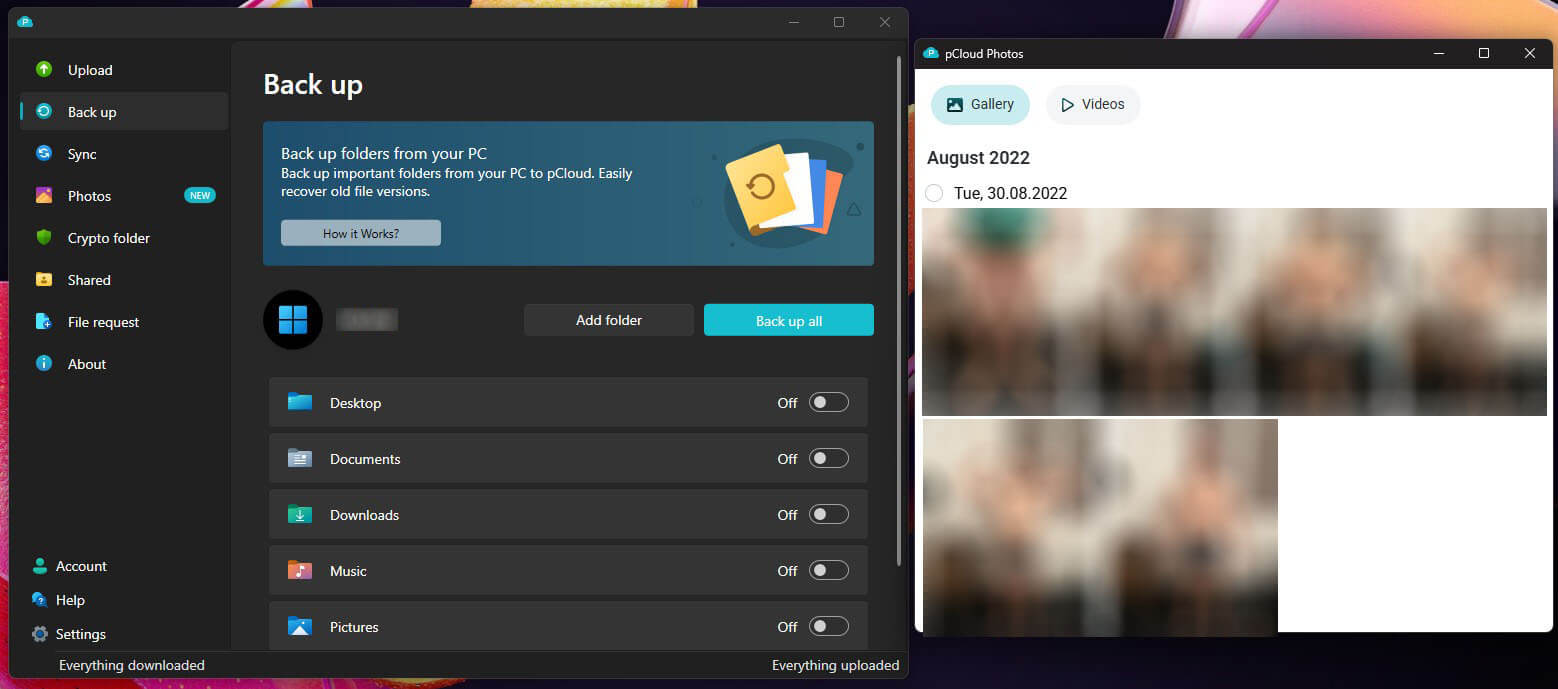
The app’s side panel leads to Sync, Crypto, Backup, Photos, and Settings. Its settings cap upload and download speed, upload screenshots automatically, and launch pCloud at startup. Desktop versions cover Windows, Mac, and Linux.
Mobile App
On first launch, the iOS and Android apps offer Automatic Upload for the camera roll, which you can accept or skip. Its options cover photos, videos, or both, new items or the whole library, and whether uploads may use mobile data. A music player with playlists and a passcode lock with fingerprint unlock are built in. The Free up space button clears local copies already in the cloud.
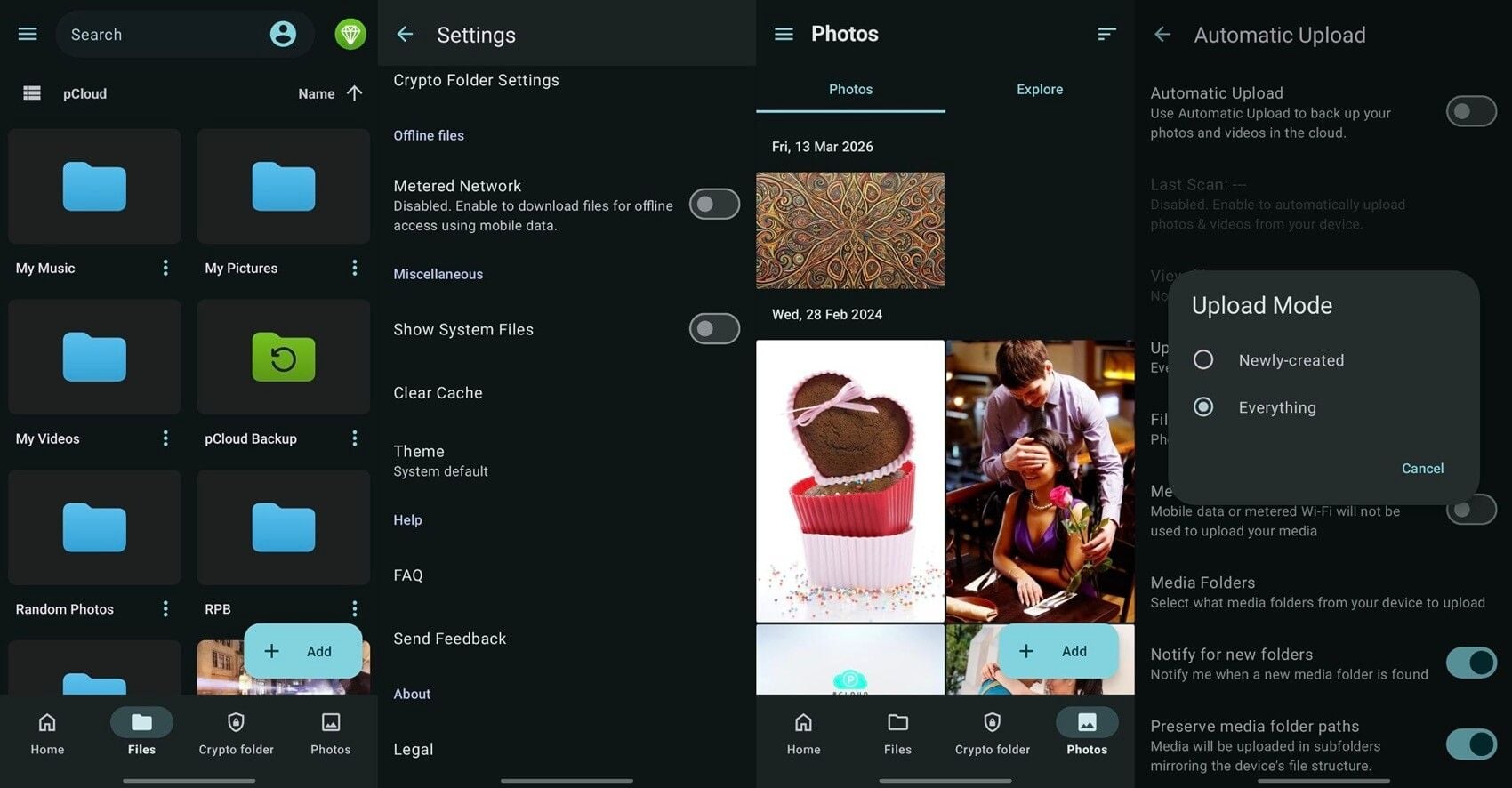
Live Photos from our iPhone were saved as a pair of unconnected files, a picture and a clip. iPhone users also find pCloud listed as a location in Apple’s Files app. The Android version adds a document scanner.
Web App
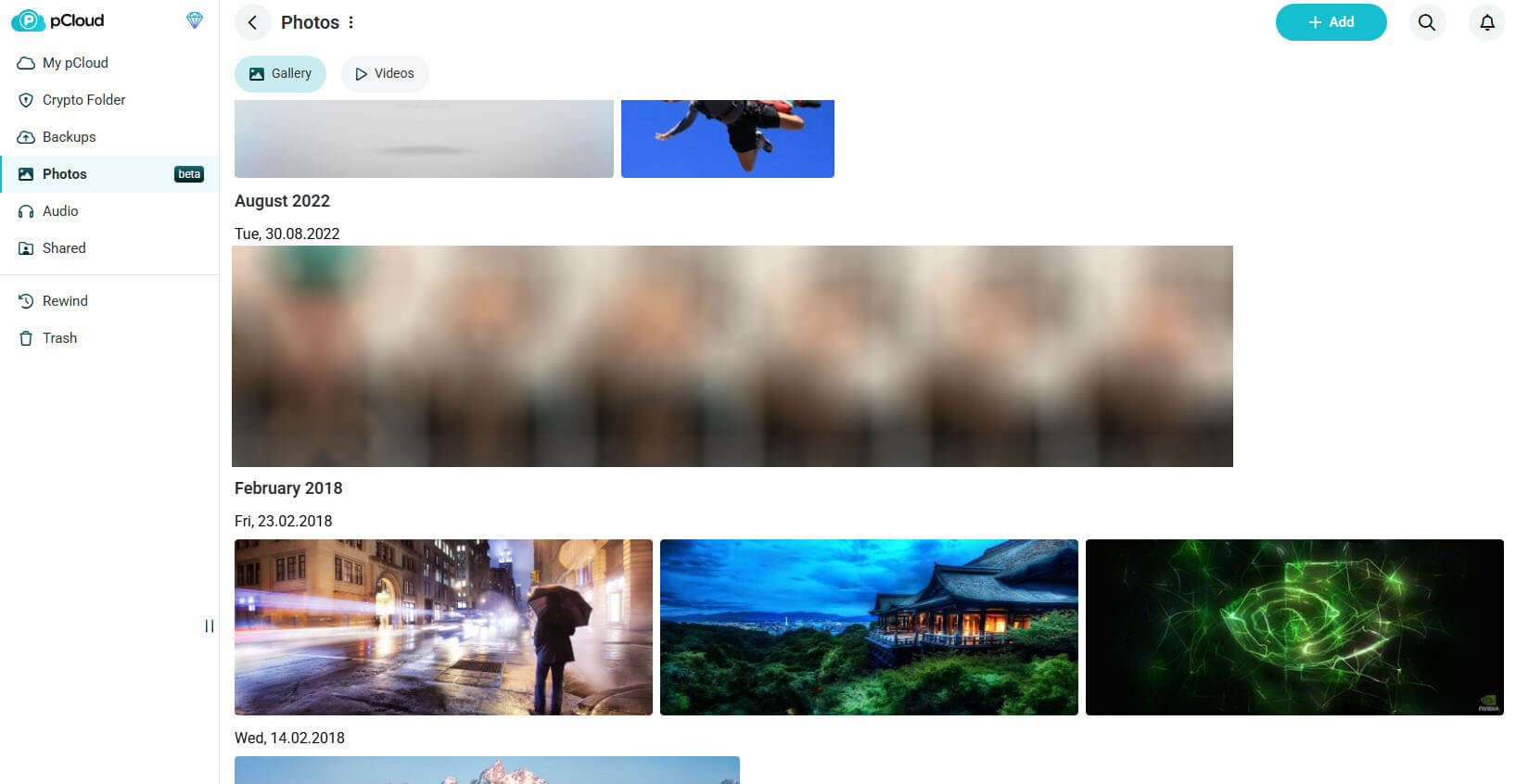
With no installation, the account also works at pcloud.com in a browser. Trash, Backups, Shared, and the music, photo, and video folders are listed in the left menu, and audio files play in the page.
pCloud Save Browser Extension
The pCloud Save extension for Chrome, Firefox, and Opera adds a Save to pCloud option to the right-click menu. It stores images, videos, and text from web pages. It doesn’t work on accounts with two-factor login enabled, so a security-conscious setup rules it out.
How Fast Is pCloud?
For our November tests, the account used pCloud’s Dallas data region, and the files went through pCloud Drive on a Windows 11 PC in Europe.
- Baseline connection: 187.95 Mbps download and 19.69 Mbps upload, measured with Speedtest
- 500 MB archive of music and video: uploaded in 3:32, downloaded in 0:24
- 2 GB file: uploaded in 15:14 at an average of 18.9 Mbps, downloaded in 1:45 at about 164 Mbps
The 2 GB download used about 87% of our download speed. Our fastest cloud storage comparison shows Dropbox one second quicker on the 500 MB upload. Still, pCloud had the shortest combined time on the two files, and it beat Google Drive by 13 seconds with the 2 GB file. Free and paid accounts transferred at the same speed, and pCloud says it doesn’t throttle any plan.
What pCloud Can Do
Folder Backup and Imports From Other Clouds
The Backup tab uploads chosen folders or a whole drive and keeps them current as files change, on free accounts too. Sync works in two directions, pairing a local folder with a pCloud folder and copying changes either way.
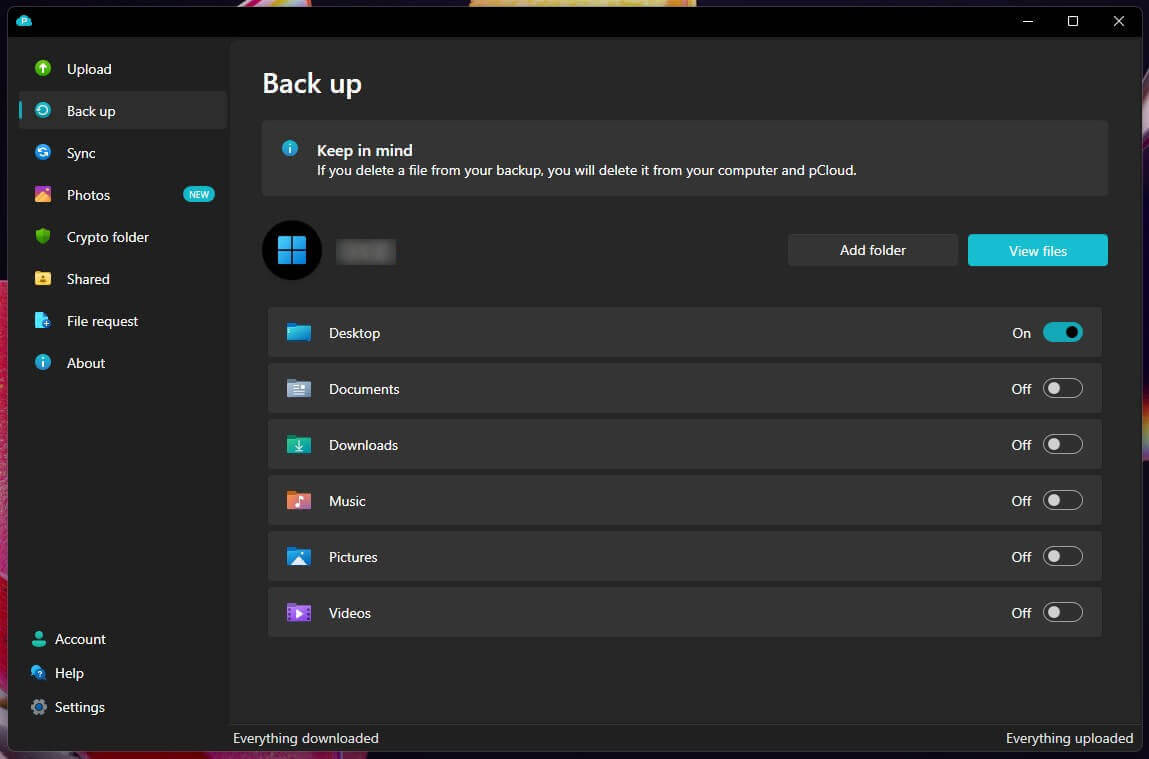
Through the import tool, pCloud pulls files from OneDrive, Dropbox, Google Drive, and Google Photos, and the import can repeat every 28 days. For a home NAS, pCloud accepts scheduled backups over four protocols: rsync, WebDAV, SFTP, and SCP.
Trash, Version History, and Rewind
The Trash keeps deleted files, plus earlier versions of edited ones, for 15 days on free accounts and 30 days on paid plans. Neither counts toward your storage. Rewind restores the whole account, or chosen folders, to a past date in that window, which reverses a bad sync or ransomware damage.
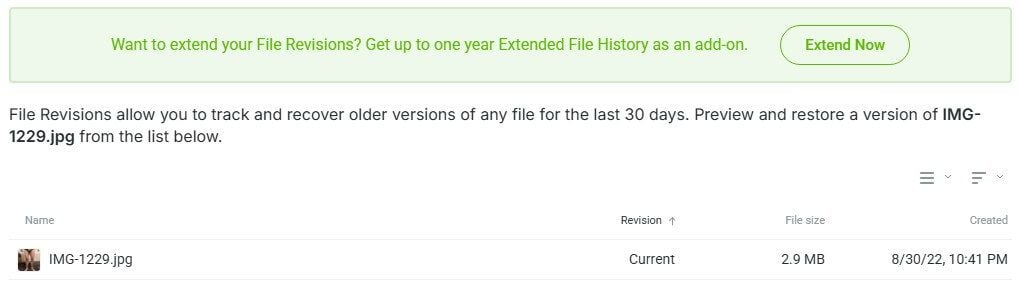
Buying Extended File History extends trash and version history to 365 days, from the purchase date onward. Business accounts keep 180 days by default.
Share Links and File Requests
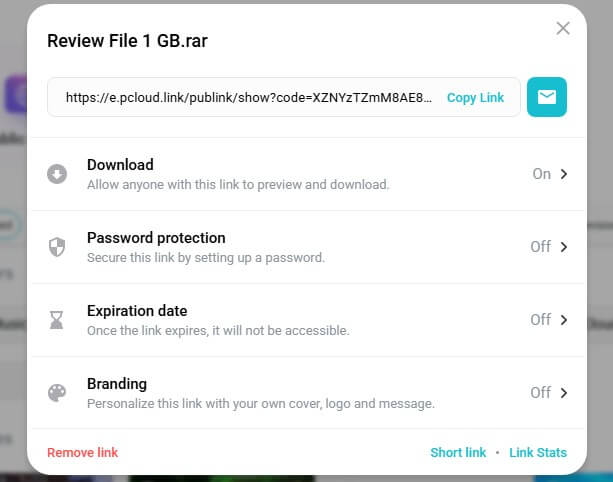
Right-clicking a file creates a share link, public by default. Paid plans add a password, an expiry date, and branding with your logo and a cover image. Each link reports its downloads. File requests collect uploads from other people into one folder without showing them its contents.
Media Player and pCloud Photos
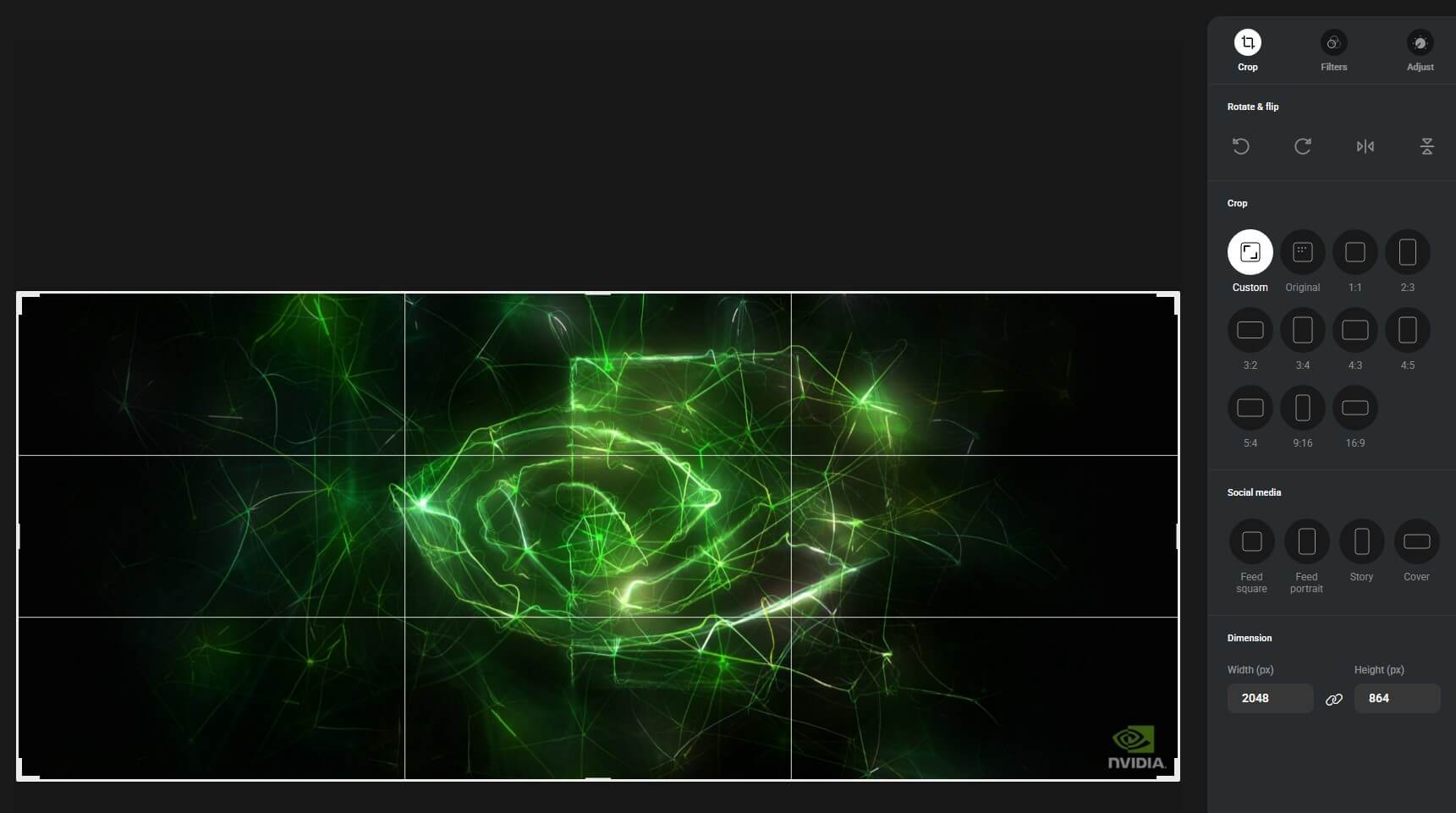
pCloud Photos arranges pictures and videos on a timeline across your devices. Its editor adjusts basic settings, applies filters, and crops to presets for social posts: Feed Square, Feed Portrait, Story, and Cover. Videos play without a download, though there’s no way to edit them.
Its music player builds playlists and groups songs by artist and album. pCloud also supports WebDAV, so media players such as Kodi can stream files from the account. Google Photos and similar apps go head to head with it in our guide to cloud storage for photos.
pCloud Docs Editors
Since September 2026, paid accounts can edit files in the browser with pCloud Docs, covering Word, Excel, and PowerPoint formats, PDFs, Markdown, and plain text. Changes save in the original format, and invited users in the same data region can edit at the same time. PDFs can be annotated, redacted, and filled in.
File Size and Link Traffic
pCloud has no maximum file size. Its monthly cap applies to shared link traffic, the data other people download or stream from your links: 50 GB on free accounts, 1 TB on the 500 GB plan, 4 TB on 2 TB, and 20 TB on 10 TB. More traffic is sold separately.
pCloud Transfer
pCloud Transfer requires no account on either end. A single transfer can’t exceed 5 GB and goes out by email or as a link that works for seven days. Adding a password encrypts the files but limits each one to 200 MB, so large videos go without one.
Is pCloud Legit and Safe?
Yes. pCloud AG has been in business since 2013 and documents these protections:
- Encryption: 256-bit AES for stored files and TLS for transfers
- Redundancy: at least five copies of each file across three or more server locations
- Sign-in: two-factor login on every account
- Jurisdiction: Swiss data protection law, plus GDPR compliance
Outside the Crypto Folder, the encryption keys belong to pCloud, as they do at Google Drive and Dropbox. pCloud therefore has technical access to those files.
The February 2026 Account Error
In February 2026, some users found other customers’ files and folders listed in their own pCloud accounts, with names and modification dates visible. pCloud’s message to affected customers said the problem was limited in scope. No public statement from pCloud turned up in our search.
Crypto Folder and the ETH Zurich Findings
Buying pCloud Encryption unlocks the Crypto Folder. Files placed in it are encrypted on the device itself. Its design pairs per-file AES-256 keys with an RSA-4096 private key. Unlocking it requires a separate Crypto Pass, which pCloud can’t reset if forgotten. The add-on costs about $50 a year or $150 once, comes with a free trial, and is included with business plans. Internxt, by comparison, encrypts every file this way on every plan at no extra cost.
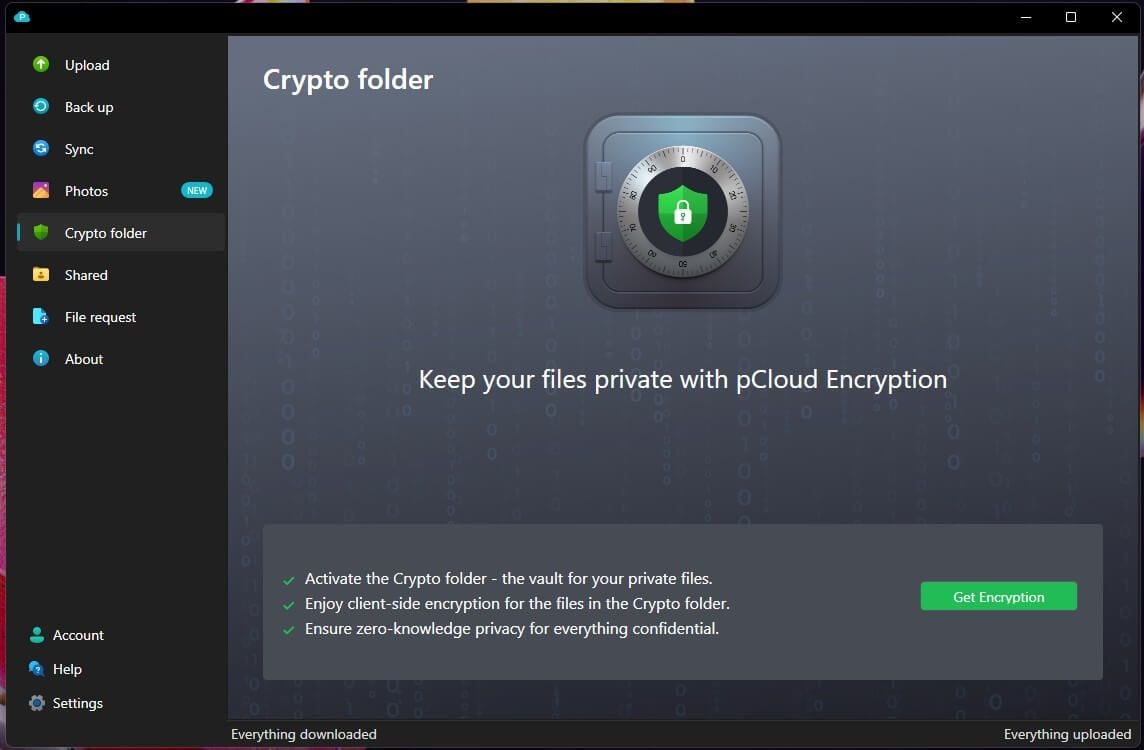
pCloud’s Crypto Folder was one of the systems examined in an October 2024 study from ETH Zurich. The researchers described an attacker who had taken over pCloud’s servers. That attacker could add fake files to a Crypto Folder and change the names or locations of existing ones. It could also substitute a user’s keys and decrypt files uploaded afterward.
The researchers received no reply from pCloud before publishing, and the company’s later comment labeled the attacks theoretical. We couldn’t find an announced fix. If stored data leaks, files under zero-knowledge encryption in the Crypto Folder stay protected. The protection doesn’t extend to an attacker who controls pCloud’s servers.
Is pCloud Free?
Yes. A free account starts at 2 GB. Five setup tasks, such as verifying the email address and installing the apps, add 1 GB each, and inviting friends unlocks the last 3 GB, up to 10 GB. The plan has no expiry date. Inactivity is the risk: after a year without a login, pCloud removes a free account along with its files. Email verification is due within 30 days of signup.
- Included: folder backup, camera upload, public share links, and full transfer speed
- Not included: pCloud Encryption, pCloud Docs, and links with passwords or expiry dates
Bigger free plans, including MEGA’s 20 GB, are compared in our free cloud storage guide.
What pCloud Costs
We checked these US prices, before tax, from a New York IP address:
- 500 GB (Premium): $219 once, or $49.99 per year
- 2 TB (Premium Plus): $499 once, $99.99 per year, or $9.99 per month
- 10 TB (Ultra): $1,499 once, or $299.99 per year
- Family (lifetime only): 2 TB, 5 TB, or 10 TB shared by up to five people
- pCloud Encryption add-on: about $150 once, or about $50 per year
Plans differ only in storage, and purchases can be refunded within 14 days. Lifetime, in pCloud’s terms, lasts 99 years or for the account holder’s lifetime if shorter. Paying $499 once for 2 TB costs about the same as five years at $99.99, and the 500 GB license breaks even before year five. A lifetime license is only as durable as pCloud itself. Our pCloud pricing guide lists the current discounts.
Business Plans
Business is $7.99 per user each month when paid yearly, or $9.99 on monthly billing, with 1 TB per user. Meanwhile, Business Pro is $15.98 per user each month on yearly billing, or $19.98 monthly, with 2 TB per user and priority support. A business account requires at least three users and includes pCloud Encryption, access controls, and 180 days of file history. For unlimited team storage, Sync.com sells unlimited business plans.
Summary
pCloud is a legitimate, fast service for photo and video libraries, PC backups, and files you plan to keep. It used nearly all the available upload bandwidth and brought back our deleted file. Its lifetime licenses pay off for buyers who stay 5 years or more. Private documents are where it falls behind. Zero-knowledge encryption costs extra, and the ETH Zurich findings still have no announced fix. If that protection has to come included, our secure cloud storage guide has alternatives.
Frequently Asked Questions
Is pCloud legit?
Yes. pCloud AG is a registered company in Baar, Switzerland, with over a decade in business. It stores customer files in Dallas or Luxembourg data centers under Swiss privacy law.
Is pCloud free forever?
Yes, as long as the account stays in use. The free plan, with up to 10 GB, has no end date, but pCloud deletes free accounts that go 12 months without a login.
What is pCloud Drive?
pCloud Drive is pCloud's desktop app for Windows, macOS, and Linux. It mounts the cloud account as a virtual drive, so files load on demand without filling local storage.
Is pCloud Transfer safe?
Yes, for everyday files. pCloud Transfer sends files over an encrypted connection and deletes them after seven days. An optional password adds encryption for files of up to 200 MB each.
What is pCloud's maximum file size?
pCloud sets no limit on individual file size. Uploads are limited only by the free space in the account, while shared links have a monthly download allowance of 1 TB to 20 TB.
Is a pCloud lifetime plan worth it?
Yes, for storage kept five years or longer. A lifetime license costs about what five years of the yearly plan would, and it never renews or increases in price.
pCloud