
We uploaded the same 2 GB file to eight cloud storage services, and the quickest finished in 15 minutes 14 seconds, 38 seconds above what our connection allows. pCloud set that time and also had the fastest download. Dropbox, Google Drive, and Internxt finished their uploads within 14 seconds of pCloud. iCloud had the slowest upload, 1 minute 34 seconds behind pCloud, and Sync.com had the slowest download. The five services in our speed ranking also feature in our list of the best cloud storage services overall.
Fastest Cloud Storage Ranked by Our 2 GB Test
- pCloud: Fastest upload and download in our 2 GB test
- Internxt: Quickest of the zero-knowledge services we timed
- NordLocker: Encrypted sharing with steady upload speeds
- Dropbox: Second-best total time, plus block-level sync
- Google Drive: Near-full speed in Google Workspace
The Fastest Cloud Storage Services, One by One
1. pCloud: Fastest in Both Directions
Pros
- Top upload and download times
- Huge single files accepted
- US and European data centers
- Account Rewind and file history
- Pay-once lifetime plans
Cons
- Encryption add-on not included
- Brief refund period
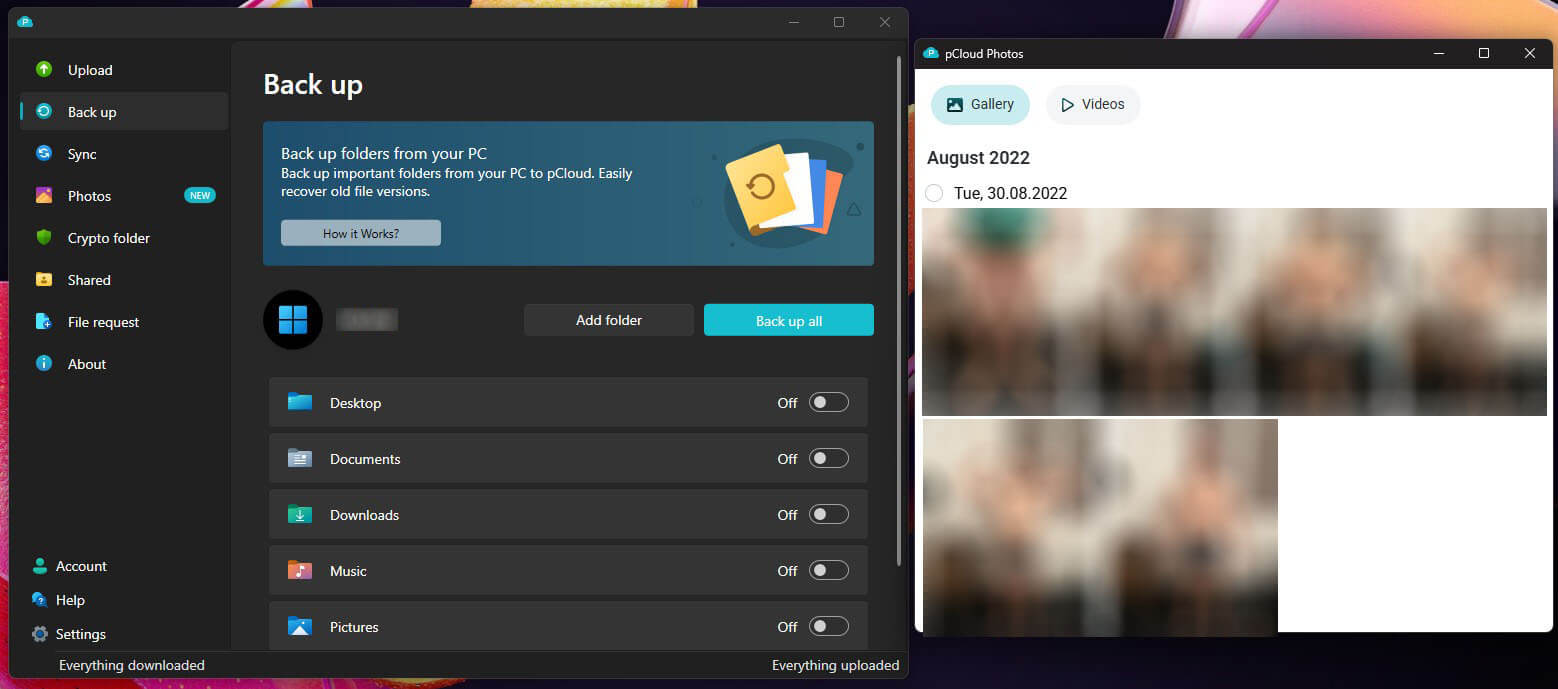
pCloud‘s upload of our 2 GB file lasted 15 minutes 14 seconds, 96% of our upload speed, and the download 1 minute 45 seconds. No other service beat it in either direction. New users choose US or European data centers at signup, and files of any size are accepted. Paying users can restore 30 days of earlier versions, and Rewind returns the whole account to an earlier state.
Lifetime 2 TB storage sells for a one-time fee just below $500. Client-side encryption costs extra, and refund requests must come within 14 days. Our pCloud review covers each plan, and the free tier leads our ranking of free cloud storage.
2. Internxt: Quickest Zero-Knowledge Service
Pros
- Zero-knowledge encryption with little speed loss
- Kyber-512 post-quantum algorithm
- Extra privacy apps on paid tiers
- Big lifetime storage tiers
- Network drive mapping on Ultimate
Cons
- Euro-only pricing
- Short file recovery on Essential
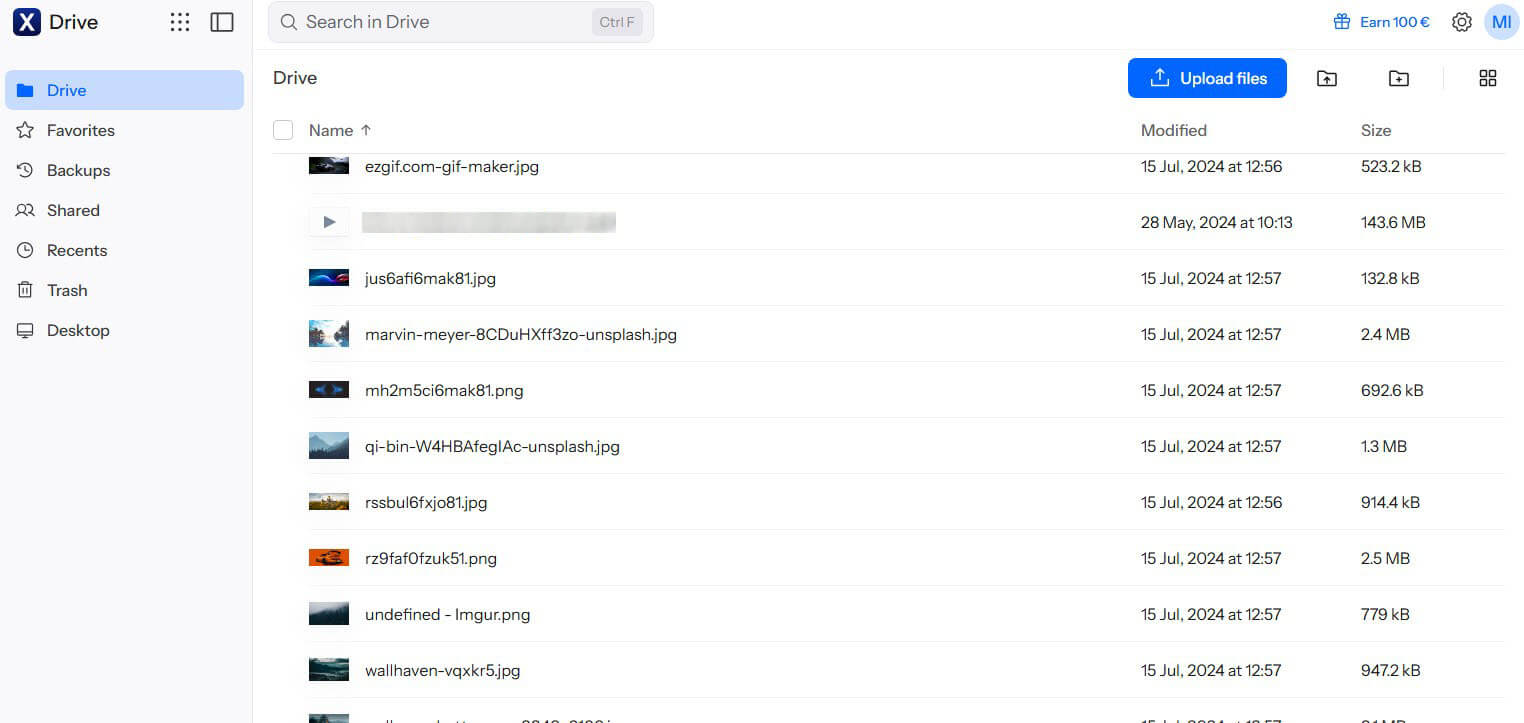
Internxt encrypts files on your computer before upload and still finished our 2 GB upload in 15 minutes 28 seconds, at 94% of our connection’s upload capacity. MEGA, NordLocker, and Sync.com also encrypt end to end, and each took longer overall. Its 1 minute 51 second download was the slowest among pCloud, Dropbox, Google Drive, and Internxt.
The encryption combines AES-256 with Kyber-512, a post-quantum algorithm, and paid tiers add a VPN, antivirus, and computer backup. The Premium 3 TB lifetime plan costs about €435, and Internxt bills in euros even in the US. Our cloud storage pricing guide compares it with other lifetime offers, and our pCloud vs Internxt test puts the two side by side.
3. NordLocker: Best for Code-Locked Sharing
Pros
- Encryption before every upload
- Security codes for shared files
- Account-free downloads for recipients
- Shows up as a drive in Windows
- Intro pricing on the 2 TB plan
Cons
- Downloads well below connection speed
- No recycle bin
- Renewal costs far more than year one
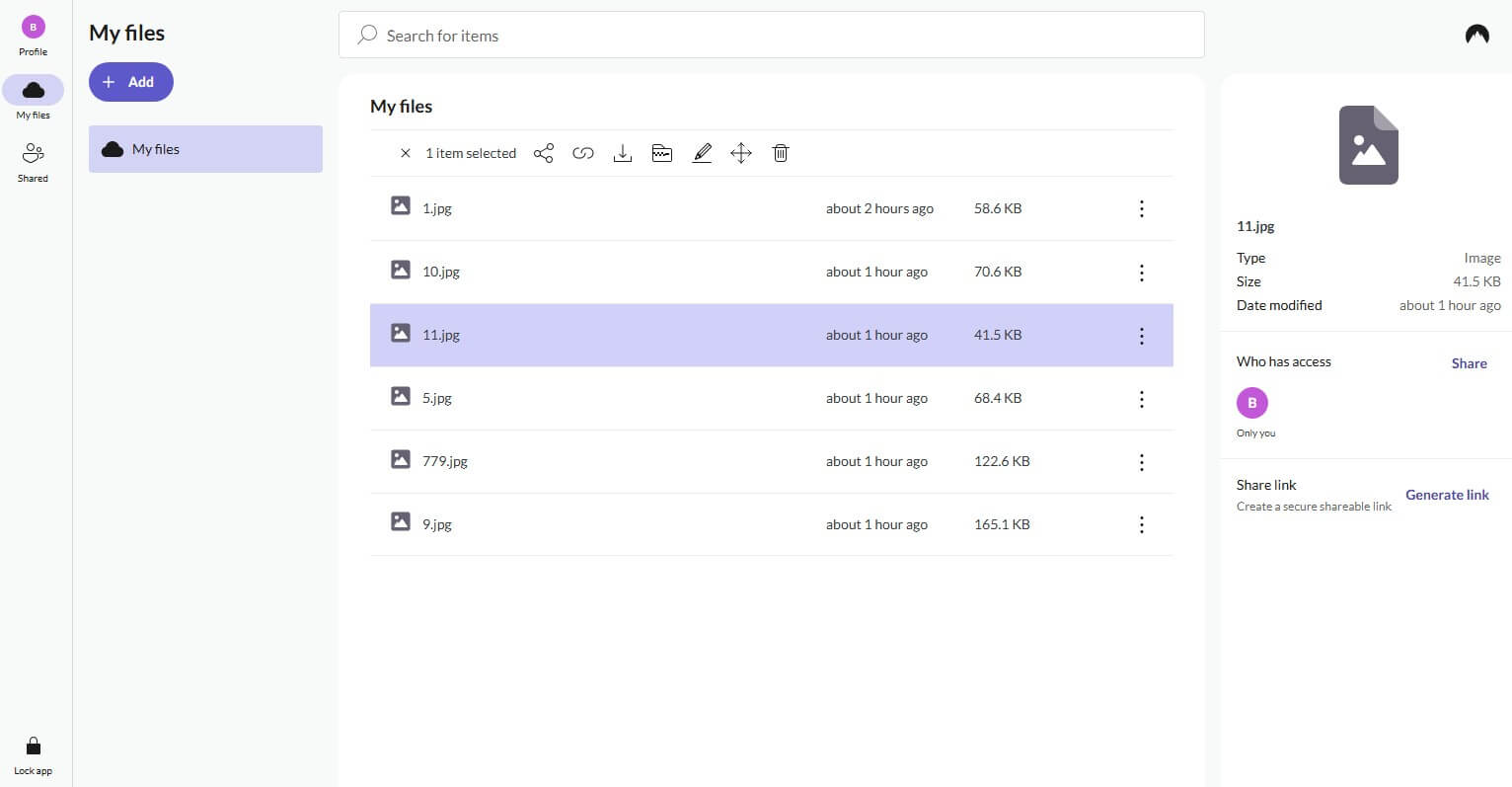
NordLocker uploaded our file in 15 minutes 58 seconds, 92% of our upload speed, and its download took 15 seconds longer than pCloud’s. MEGA’s total time came in 7 seconds under NordLocker’s, but NordLocker ranks higher for its sharing controls. NordLocker is a Nord Security product, sold alongside NordVPN. Files are encrypted end to end.
Shared links stop working after a set date, can be locked with a code, and don’t require the receiver to sign up. There’s no recycle bin, so a deleted file can’t be recovered, and NordLocker shouldn’t be the only place a file is stored. Our NordLocker review walks through each app.
4. Dropbox: Best for Syncing Edited Files
Pros
- Top-tier upload times
- Re-syncs only changed file blocks
- Faster syncing between PCs on one network
- Built-in PDF tools
- Microsoft and Google app integrations
Cons
- Tiny free tier
- Files readable by Dropbox on personal plans
- Link passwords cost extra
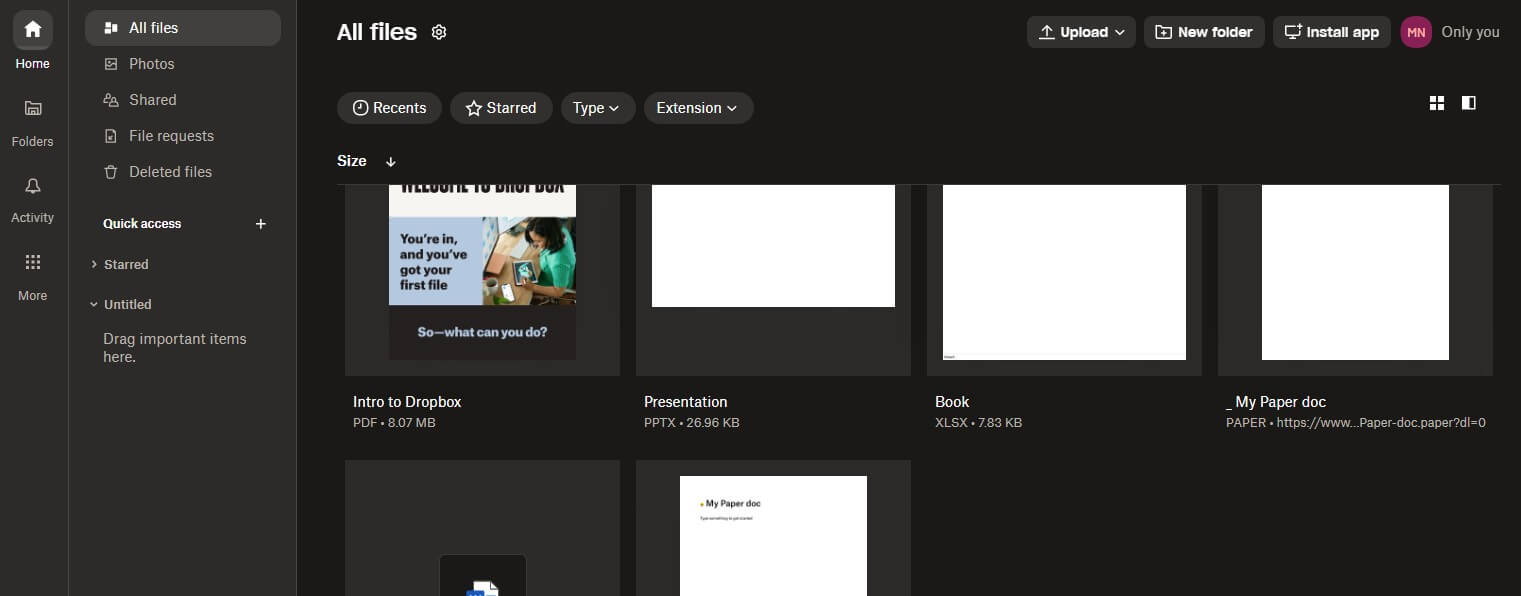
Dropbox finished the upload in 15 minutes 16 seconds and the download in 1 minute 48 seconds, the second-best total in our test. Speed improves further once files are in place. Dropbox’s block-level sync uploads only the parts of a file that change, so saving a large edited document again goes much quicker than the first upload.
Its LAN sync also copies files between computers on the same home or office network, and it works directly with Microsoft Office and Google Workspace apps. Personal plans don’t encrypt files end to end, and link passwords require the Standard plan. Our Dropbox vs pCloud comparison weighs it against our top choice.
5. Google Drive: Best for Speed in Google Workspace
Pros
- Fast file retrieval
- Docs and Sheets edited without downloading
- Large free allowance
- Data centers on several continents
- AI tools on higher Google One tiers
Cons
- Daily upload cap
- Not zero-knowledge
- Quota shared with Gmail
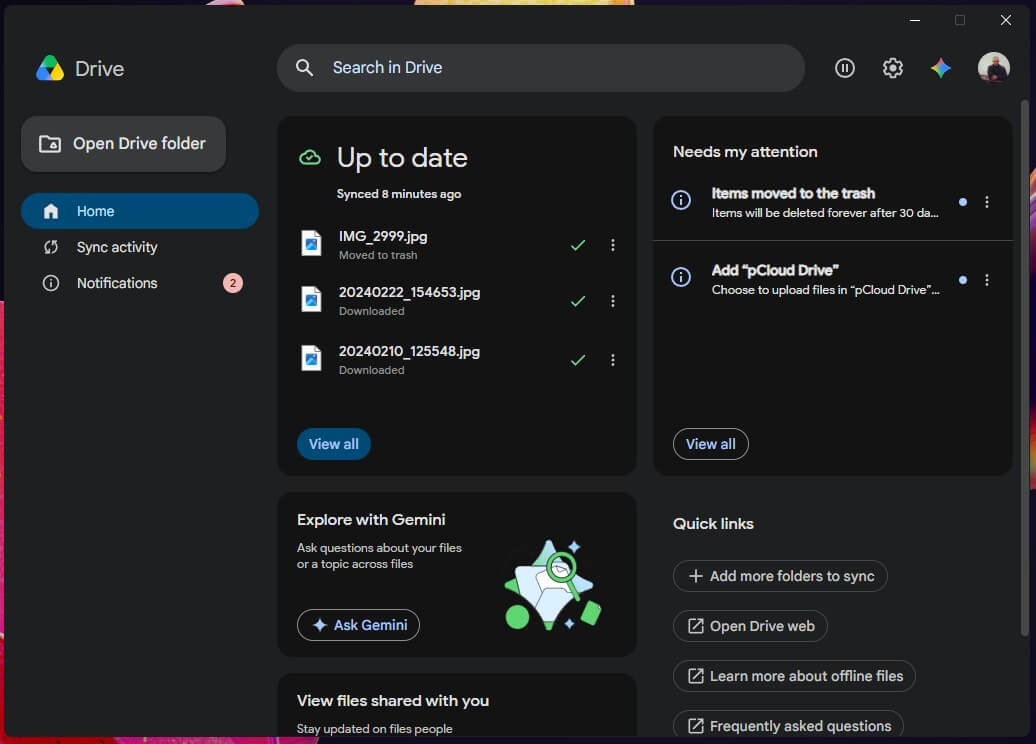
Google Drive for desktop finished our upload in 15 minutes 27 seconds, with a download time of 1 minute 46 seconds. Docs, Sheets, and Slides save online, so shared work doesn’t wait for a download, and Microsoft’s OneDrive follows a similar office-first model. Each account can upload up to 750 GB a day, a limit only big backup jobs hit.
Google keeps the encryption keys, so private files belong on another service. Our list of Google Drive alternatives covers more private services, and the cheap cloud storage page covers budget plans.
Upload and Download Times for a 2 GB File
For this test, a 2 GB archive went up through each service’s desktop app and came back down into a clean folder, all from one Windows 11 computer in Europe. Speedtest showed 187.95 Mbps of download speed and 19.69 Mbps of upload speed before the test. At those speeds, the fastest possible upload of that file is 14 minutes 36 seconds, and the fastest download is 1 minute 31 seconds.
| Service | Upload | Download | Total | Upload speed used | Download speed used |
| pCloud | 15:14 | 1:45 | 16:59 | 96% | 87% |
| Dropbox | 15:16 | 1:48 | 17:04 | 96% | 85% |
| Google Drive | 15:27 | 1:46 | 17:13 | 95% | 87% |
| Internxt | 15:28 | 1:51 | 17:19 | 94% | 83% |
| MEGA | 16:01 | 1:50 | 17:51 | 91% | 83% |
| NordLocker | 15:58 | 2:00 | 17:58 | 92% | 77% |
| Sync.com | 16:21 | 2:09 | 18:30 | 89% | 71% |
| iCloud | 16:48 | 1:53 | 18:41 | 87% | 81% |
The top four were 20 seconds apart on total time, too close to matter on a home connection, so features and price decide between them.
Where MEGA, Sync.com, and iCloud Fell Behind
MEGA: Slower Uploads
MEGA was slower to upload, at 16 minutes 1 second, though its 1 minute 50 second download beat NordLocker’s. Only Sync.com and iCloud uploaded more slowly. Free accounts also face a transfer quota that limits downloads over a set period. MEGA’s 20 GB free plan is also a strong iCloud alternative for Apple users who want more free space.
Sync.com: Slowest Download
Sync.com took 16 minutes 21 seconds to upload and 2 minutes 9 seconds to download, using 89% and 71% of our connection’s speeds. Its strengths are end-to-end encryption and an unlimited storage plan, useful for long-term archives. Our Sync.com review covers the rest.
iCloud: Slowest Upload We Recorded
iCloud for Windows took 16 minutes 48 seconds to upload our file, slower than every other service in the table, using 87% of our upload speed. Uploads have been slow in our everyday iCloud use too, so moving a large photo or video library there takes noticeably longer than on pCloud or Google Drive. Its download took 1 minute 53 seconds, 8 seconds longer than pCloud’s. iCloud stays the simplest choice on Apple devices, and our iCloud vs Google Drive comparison covers where it does better.
How Long Does a 2 GB Upload Take?
Upload time depends on your connection’s upload speed. At best, a 2 GB file takes:
| Upload speed | Fastest possible 2 GB upload |
| 10 Mbps | 26 minutes 40 seconds |
| 20 Mbps | 13 minutes 20 seconds |
| 50 Mbps | 5 minutes 20 seconds |
| 100 Mbps | 2 minutes 40 seconds |
| 300 Mbps | 53 seconds |
| 1 Gbps | 16 seconds |
Add about 5% for the fastest services. pCloud, Dropbox, Google Drive, and Internxt used 94% to 96% of our upload speed.
What Affects Cloud Storage Speed
- Your upload bandwidth: most home plans upload far slower than they download, and no cloud service can exceed that limit.
- Distance to the data center: pCloud lets new accounts choose US or European storage, and closer servers usually shorten transfers.
- Encryption on your PC: MEGA, NordLocker, and Sync.com encrypt files locally and were slower in our test, though Internxt shows the cost can be small.
- Wi-Fi and shared traffic: a wired connection and pausing other uploads help large transfers finish sooner.
- App speed settings: Dropbox, pCloud, and Google Drive for desktop can cap upload speed, so check that no limit is set.
Final Thoughts
Choose by what you move most. For large uploads and downloads, pCloud was quickest in both directions and adds lifetime plans. For sensitive files, Internxt kept nearly full speed with zero-knowledge encryption, and NordLocker adds protected share links at a small speed cost.
Finally, for documents that change often, Dropbox re-syncs only the edited parts, and Google Drive keeps shared work in Docs and Sheets without downloads. MEGA and Sync.com are slower but still usable when privacy or free space counts more for you than transfer time. iCloud uploaded slowest of the eight, so large photo and video libraries take the longest to upload there.
Frequently Asked Questions
What is the fastest cloud storage?
pCloud is the fastest cloud storage, with uploads and downloads close to the full speed of a home connection. Dropbox and Google Drive trail it by seconds on large files.
Is pCloud fast?
Yes. pCloud uploads and downloads at nearly the full speed of the connection, and it lets new accounts store files in the US or Europe to keep transfers short.
Is Dropbox faster than Google Drive?
Yes, slightly. Dropbox uploads large files a little faster and re-syncs edited files more quickly thanks to block-level sync, while Google Drive downloaded our test files a few seconds sooner.
Which cloud storage is fastest for downloads?
pCloud and Google Drive download fastest, bringing our 2 GB file back in 1 minute 45 seconds and 1 minute 46 seconds. Encrypted services such as Sync.com take noticeably longer.
Does cloud storage speed depend on the internet connection?
Yes. No cloud storage service can move files faster than the connection allows, and upload speed is usually the limit, because home plans offer far less upload than download bandwidth.
What is the fastest cloud backup?
pCloud is the fastest cloud backup among cloud storage services, backing up chosen PC folders at nearly full upload speed. IDrive is the dedicated choice for whole-computer backups.
