Search the Firefox add-on store for “VPN,” and you’ll get dozens of results, many of them free, some with thousands of five-star reviews. Some of those free add-ons have turned out to hide malware, so a high rating alone proves very little. Since March 2026, Firefox has also offered a free VPN of its own, which makes the choice even less obvious.
A good VPN add-on hides your IP address from the sites you visit, stops Firefox from leaking it through WebRTC, and changes your location with one click. A bad one sends your browsing through a stranger’s server. We compared the official add-ons from the VPNs we trust most, and five are worth installing.
Top 5 VPN Extensions for Firefox in 2026
- NordVPN: Best Overall, with an add-on that works without the desktop app
- Proton VPN: Best for Privacy, with double-hop servers in Firefox
- ExpressVPN: Easiest to Use, as an add-on alone or as a remote for the app
- CyberGhost: Best Free Add-on, with no account or sign-up
- Surfshark: Best for Extra Tools, with ad, tracker, and cookie pop-up blocking in the add-on
Firefox VPN Add-ons Compared
Every add-on in our ranking protects Firefox only, and each VPN also offers apps that protect the rest of your devices.
| VPN | Add-on works without the app | Free to use | Extras in the add-on | Ads blocked in our test | Speed loss |
| NordVPN | Yes | No (30-day refund) | Site exclusions, location spoofing, ad blocking | 52% | 7.8% |
| Proton VPN | Yes | Free plan works in the add-on | Secure Core, split tunneling | No ad blocker | 10.2% |
| ExpressVPN | Yes, in proxy mode | No (30-day refund) | Location spoofing, ad blocking, per-site rules | 87% | 7.8% |
| CyberGhost | Yes | Yes, no account | Tracker blocking | Trackers only | 13.3% |
| Surfshark | Yes | No (30-day refund) | CleanWeb, bypass list, WebRTC toggle | 79% | 9.6% |
Best VPNs for Mozilla Firefox: Detailed List
Each of these VPNs offers an official add-on on Mozilla’s own store, signed by the VPN company itself. Here’s what each one adds to Firefox, and where it falls short.
1. NordVPN: Best Overall VPN for Firefox
Pros
- Add-on works with the desktop app closed
- Blocks WebRTC leaks by default
- Matches the browser’s location and time zone to the server
- Lets chosen sites skip the VPN
- Independently audited no-logs policy
Con
- Ad blocker misses many ads
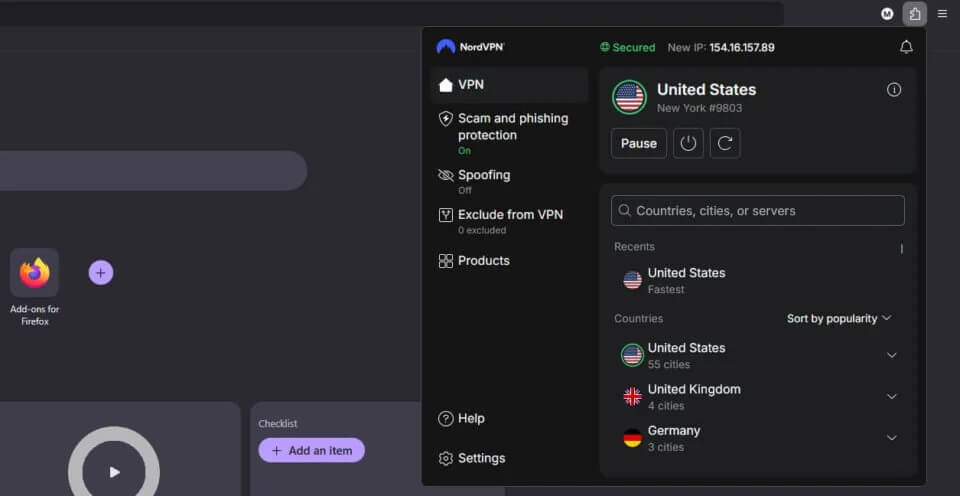
NordVPN has the most complete Firefox add-on we’ve used. It works on its own, so it suits a work laptop where you can’t install the full app, and it blocks WebRTC leaks without any setup. It also matches Firefox’s reported location and time zone to the server, so a site that compares them sees no mismatch.
That helps you bypass VPN blocks: in our tests, the add-on unblocked ITVX and Prime Video, which sometimes detected the desktop app. Beyond the add-on, the same subscription covers 10 devices and servers in 152 countries. In our tests, NordVPN lost only 7.8% of its speed on average.
It also unblocked Netflix US, BBC iPlayer, HBO Max, and every other streaming service we tested. Its Onion Over VPN servers also help if you use Tor, while the Complete plan adds next-gen antivirus, which blocks malware and trackers across the device. Its ad blocker is weaker, since it caught only about half the ads on our test page.
If ads bother you, keep a separate ad blocker alongside it. On the two-year Basic plan, NordVPN is about $3.50 a month, and a 30-day money-back guarantee covers the purchase.
2. Proton VPN: Best for Privacy in Firefox
Pros
- Double-hop Secure Core servers in the add-on
- Choose sites that skip or use the VPN
- Works in Firefox-based browsers such as LibreWolf
- Swiss company with yearly no-logs audits
- Open-source apps
Cons
- Couldn’t unblock Hulu
- No ad blocker in the add-on
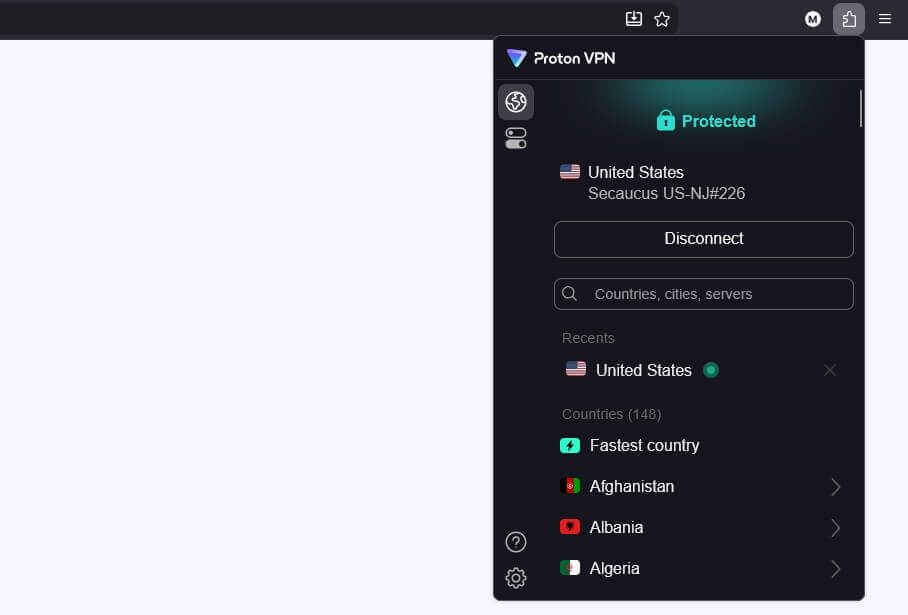
Proton VPN puts its strongest privacy tool straight into Firefox. Secure Core sends your traffic through a hardened server in Switzerland, Sweden, or Iceland first. Then it connects to the server you chose, so even a compromised server can’t trace the traffic back to you. No other add-on in our ranking offers that.
Split tunneling works both ways as well: you can list the sites that skip the VPN, or the only sites that use it. The company behind the add-on is just as reassuring, since its apps are open source and an outside firm audits its privacy claims every year. In our tests, Proton VPN lost 10.2% of its speed, which is plenty for 4K.
It unblocked Netflix US, BBC iPlayer, and HBO Max, but it couldn’t unblock Hulu or ITVX, so NordVPN is the safer choice for those. Unlike the apps, the add-on has no NetShield ad blocker, so it blocked almost none of the ads on our test page. Pair it with a separate ad blocker if you want one.
VPN Plus costs about $3 a month on a two-year plan and covers 10 devices, and each browser counts as one, including Microsoft Edge.
3. ExpressVPN: Easiest Firefox VPN to Use
Pros
- Works alone or as a remote control for the app
- Location spoofing with one setting
- Blocks WebRTC leaks
- Unblocked every streaming service we tested
- Blocked most ads on our test page
Cons
- Few advanced settings
- Default mode stops when the app closes
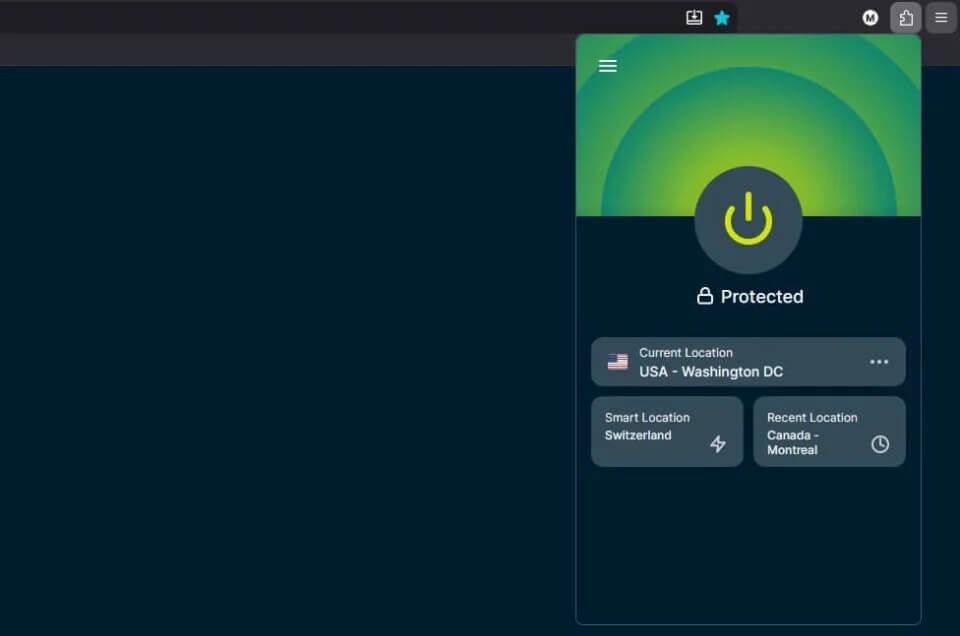
ExpressVPN rebuilt its add-on in 2026, and it now works in two ways. By default, it acts as a remote control for the desktop VPN app, which encrypts every app on the computer. In proxy mode, it works independently and protects Firefox only, with its own sign-in. In our tests, closing the app stopped the add-on in its default mode-
So, switch to proxy mode if you won’t keep the app open. In practice, the add-on keeps things short: one button to connect and a Spoof your location setting that makes the browser’s location match the server. Its ad blocker also caught 87% of the ads on our test page, the best result in our ranking.
On top of that, ExpressVPN tied NordVPN for speed and unblocked every streaming service we tested. The subscription covers 10 to 14 devices, depending on the plan. On the other hand, there isn’t much to adjust. If you want to fine-tune everything, NordVPN offers more. Its Basic plan is about $3 a month on ExpressVPN’s two-year plan.
The renewal price is much higher, so check it before the first term ends.
4. CyberGhost: Best Free Firefox VPN Add-on
Pros
- Free add-on with no account or sign-up
- Connects with one click
- Blocks malicious trackers and scripts
- Paid app has streaming and torrenting servers
Cons
- Only four locations in the free add-on
- No WebRTC leak protection in the add-on
- Couldn’t unblock Netflix Japan
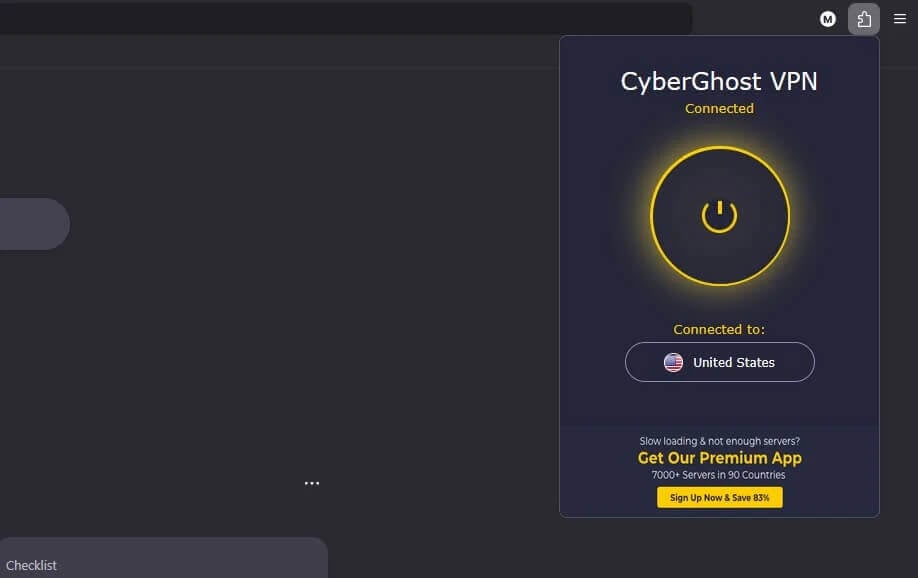
CyberGhost is the only VPN in our ranking with a Firefox add-on that costs nothing and requires no account. Install it, and you can connect to the US, Germany, the Netherlands, or Romania straight away. It’s a proxy, so it changes your IP address in Firefox and blocks some malicious scripts, but it’s a basic tool next to the paid add-ons.
The bigger issue is WebRTC. CyberGhost says the free add-on doesn’t protect against WebRTC leaks, so a site can still read your real IP address through that browser feature. If you use it, disable WebRTC in Firefox’s advanced settings yourself, or install the desktop app, which protects the whole connection.
The paid CyberGhost VPN is a different product. Its app lost 13.3% of its speed in our tests and has servers built for streaming and torrenting. It unblocked most services we tested, with Netflix Japan as the exception. It costs around $2 a month on the two-year plan, covers seven devices, and comes with a 45-day money-back guarantee.
5. Surfshark: Best Firefox Add-on for Extra Tools
Pros
- Ad, tracker, and cookie pop-up blocking in the add-on
- WebRTC protection you can toggle
- Bypass list for sites that dislike VPNs
- No device limit
Cons
- Desktop app couldn’t unblock ITVX
- Slow to connect at times
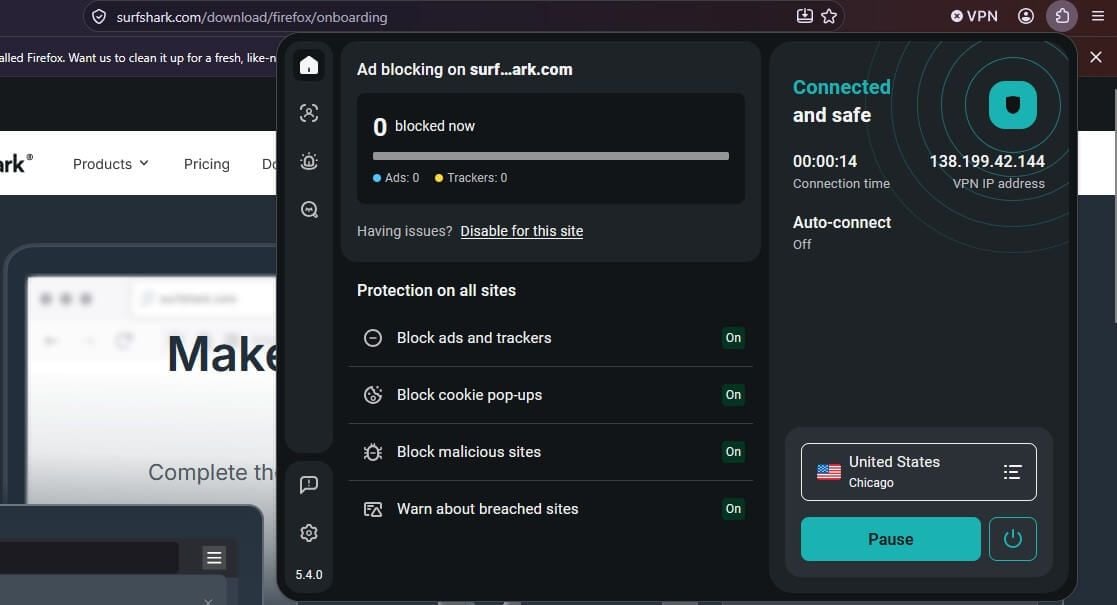
Surfshark builds the most tools into its add-on. CleanWeb blocked 79% of the ads on our test page and removes cookie pop-ups, so it can stand in for a separate ad blocker. The add-on also has a WebRTC toggle in its settings and a bypass list. With it, your bank or a site that dislikes VPNs loads on your normal connection.
Streaming is another strength. In our tests, Surfshark unblocked Netflix US, Netflix Japan, BBC iPlayer, Hulu, and HBO Max with little speed loss. The desktop app couldn’t unblock ITVX, but the add-on unblocked it with location spoofing enabled. Our Surfshark review covers the rest of its results.
Connections sometimes took a few seconds longer than usual, so wait a moment before you click again. As for price, the Starter plan costs about $2.50 a month on a two-year term, and one subscription covers every device you own.
Firefox’s Built-in VPN vs a VPN Add-on
Since version 149, Firefox includes a free VPN of its own, rolling out region by region on desktop and Android. It requires a Mozilla account, covers Firefox traffic only, and offers 50 GB of data a month. Once you use it up, the VPN pauses until the next month. You can choose a location in recent versions, or leave it on the recommended one.
That makes it a sensible option for light browsing on public Wi-Fi. However, 50 GB disappears quickly if you stream sports or movies. The server list is short, and it has none of the paid add-ons’ extras, such as WebRTC controls, ad blocking, or Secure Core.
Mozilla’s separate paid service, Mozilla VPN, protects the whole device instead, but it covers fewer countries than our top five.
How to Install a VPN Add-on on Firefox
Installing a VPN add-on takes a couple of minutes. We’ll use NordVPN as the example, since the steps are almost identical for the others.
- Sign up for NordVPN using our link. Choose a plan, enter your email address, and complete the payment. NordVPN then sends a confirmation email where you set your password.
- Install the desktop app as well, if you want the rest of your computer protected. It’s optional, since the add-on works on its own.
- Open Firefox and go to the official Mozilla Add-ons page. Search for NordVPN and select the add-on published by the VPN company.
- Click “Add to Firefox”, then confirm the permissions. When Firefox asks whether the add-on can run in private windows, allow it, or private tabs will skip the VPN.
- Sign in and connect. Click the add-on’s icon next to the address bar, log in, and choose a country or use Quick Connect. The add-on shows “Connected” once the connection is up.
The process mirrors installing a free Chrome VPN. Phones work differently: Firefox for Android doesn’t support any of these add-ons, so install the VPN’s Android app instead.
Should I Use Free VPN Extensions on Firefox?
Only from a company you already trust. In December 2025, researchers found 17 Firefox add-ons hiding malicious code, including two sold as free VPNs, and Mozilla removed them from its store. Other free “VPN” add-ons are simple proxies that don’t encrypt anything, and some collect your browsing history to pay for the servers.
Hola VPN, for example, is free but tracks what you do online. Two safe free options exist. CyberGhost’s add-on requires no account, and Proton VPN’s free plan now works in its Firefox add-on with no data cap. That said, Proton VPN chooses the free server for you and doesn’t unblock streaming services there. Firefox’s own built-in VPN is the third free choice.
Even so, free add-ons are poor for streaming and torrenting, and some lack WebRTC protection. If you want to stream or torrent, NordVPN is worth the small monthly cost.
What a VPN Add-on Does in Firefox
A virtual private network sends your browser’s traffic through an encrypted server, so sites see the server’s IP address instead of yours. In Firefox, a good add-on does three useful things.
- First, it stops WebRTC leaks. WebRTC lets Firefox make video calls, but it can also reveal your real IP address to a website even while a VPN is connected. None of the paid add-ons in our ranking leaked our IP address through WebRTC in our tests. With CyberGhost’s free add-on, type about:config in the address bar, search for media.peerconnection.enabled, and set it to false.
- Second, it changes your location. Connect to a server in another country, and sites treat you as a local there. For example, a South African IP address makes South African sites load as they would for residents. The same trick lets you access blocked websites at school or work, or use your usual sites while traveling.
- Third, it hides your browsing from the network. Your ISP, the café Wi-Fi, or your office network sees an encrypted connection to the VPN server instead of the sites you open. Remember that an add-on covers Firefox only, so your other apps still use your real IP address.
None of the add-ons has a kill switch either, which cuts your connection if the VPN drops. The desktop app covers them, and the same VPNs offer add-ons for other browsers, such as our top Chrome VPN extensions.
Final Thoughts
A VPN add-on is worth having in Firefox, as long as it comes from a VPN company with a proven no-logs policy. The free add-ons with the highest ratings are not always that, and some have turned out to be malware. NordVPN stands out as the best VPN for Mozilla Firefox.
Its add-on works on its own, blocks WebRTC leaks, and keeps your location consistent, while the same subscription protects the rest of your devices. Proton VPN comes a close second if privacy is your priority, thanks to Secure Core in the browser.
If you only browse on public Wi-Fi now and then, Firefox’s built-in VPN or CyberGhost’s free add-on will do. Just disable WebRTC with CyberGhost, and switch to a paid VPN once you start streaming.
FAQs
Does Firefox have a built-in VPN?
Yes. Firefox includes a free built-in VPN on desktop and Android in a growing list of countries. It requires a Mozilla account, has a monthly data allowance, and protects Firefox traffic only.
Is there a free VPN extension for Firefox?
Yes. CyberGhost offers a free Firefox proxy add-on with no account, and Proton VPN's free plan works in its Firefox extension. Both are safer than unknown free add-ons, which can collect browsing data.
Do VPN extensions work on Firefox for Android?
No. NordVPN, Proton VPN, ExpressVPN, CyberGhost, and Surfshark offer their Firefox add-ons for desktop only. On Android, the VPN's own app protects Firefox and every other app on the phone.
Is a VPN extension as safe as a VPN app?
No, not for the whole device. An extension protects browser traffic only, while a VPN app encrypts every app's connection. Running both adds browser tools such as WebRTC blocking.
Can I use multiple VPN extensions on Firefox at the same time?
No. Firefox lets only one add-on control its proxy settings, so a second VPN extension can override the first, cause conflicts, or break the connection. One trusted VPN extension is enough.
Do VPN add-ons work in Firefox private windows?
Yes, once allowed. Firefox disables add-ons in private windows by default, so the VPN add-on requires permission to run there, which users can grant during installation or in the Add-ons Manager.
